
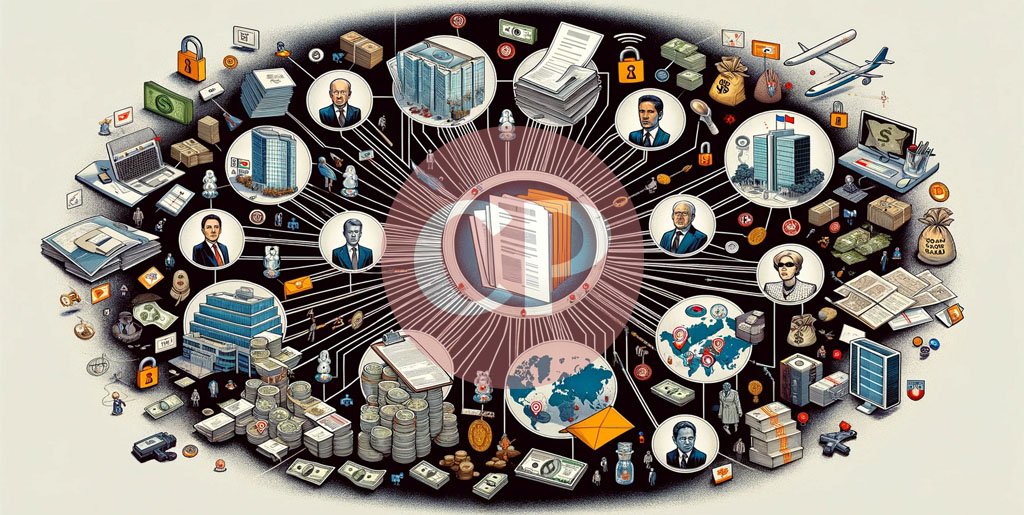

Retrospective. On April 3, 2016, media outlets in about 80 countries simultaneously published the “Panama Papers.” They were based on 11.5 million internal documents from the Panamanian law firm Mossack Fonseca, which an anonymous source had leaked to the Süddeutsche Zeitung. The International Consortium of Investigative Journalists (ICIJ) coordinated the analysis with some 400 journalists.
What the documents showed
The documents showed how politicians, sports officials, celebrities and criminals used shell companies in tax havens to conceal their wealth. Not every one of these companies is illegal, but the investigation showed how easily the true owners can be hidden.
The consequences
Iceland’s prime minister, Sigmundur Davíð Gunnlaugsson, resigned a few days after publication, and in Pakistan, Prime Minister Nawaz Sharif was removed from office by the Supreme Court in 2017. Mossack Fonseca closed in 2018. In the years that followed, governments recovered billions in taxes and penalties. The ICIJ won the Pulitzer Prize in 2017. The Maltese journalist Daphne Caruana Galizia, who had investigated the Panama Papers in Malta, was murdered by a car bomb in October 2017.
Update
In June 2024, a court in Panama acquitted all 28 defendants in the Mossack Fonseca case of money laundering, including co-founder Jürgen Mossack. The judge found that the chain of evidence was not conclusive. The ICIJ defended its work.
Sources: ICIJ, Panama Papers · taz/dpa on the 2024 ruling · SRF
Editor’s note: This article was revised by the editors on November 17, 2026. Figures, consequences, sources and the 2024 ruling were added.