
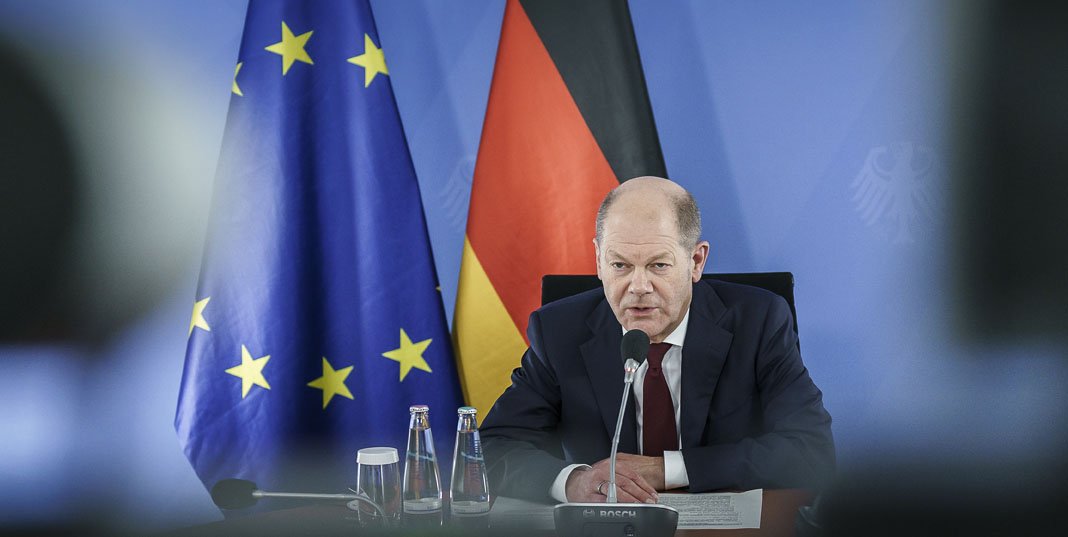

Chancellor Olaf Scholz gave a speech to the plenary of the Financial Action Task Force on Tuesday. The fight against money laundering and terrorist financing “begins at home, at the national level,” he said. The plenary meeting continues in Berlin until June 17.
|
Fighting money laundering and terrorist financing at the national level
The German government has stepped up its efforts in recent years and taken a whole series of measures against money laundering and terrorist financing:
- closing legal loopholes, for example in the real estate sector
- stricter reporting obligations for notaries, lawyers and tax advisers
- more effective prosecution through the reform of the criminal offense of money laundering
- strengthening the Financial Intelligence Unit (FIU), which receives reports of suspicious financial flows
- improving the national transparency register
“Our goal is strong, modern and efficient laws and institutions” in the fight against money laundering, Scholz said.
|
Better enforcement of sanctions against Russian oligarchs
The improved transparency register also helps enforce sanctions against Russian oligarchs and their sometimes hidden assets. Previously, it was necessary to work out from various lists who the beneficial owner was, that is, who actually owns a company or a house, for example. Now this information can be taken digitally from a single list. On this basis, Germany will now set up a national register of assets that are subject to sanctions or of unclear origin.
|
A global transparency register would be a quantum leap
But money laundering and terrorist financing do not stop at national borders. “The fight against these crimes can only be won together, within Europe and worldwide,” Chancellor Scholz warned. The German government therefore supports and encourages the FATF in developing its standards further. A global transparency register disclosing who ultimately profits from gains or is behind assets would be “a quantum leap,” Scholz said. The G7, currently chaired by Germany, is pushing for exactly that.
At the European level, Germany is pressing for legal loopholes to be closed and the legal framework to be harmonized within the EU. A central proposal is the creation of a new European anti-money laundering authority (AMLA). This authority would have direct supervisory powers over high-risk financial institutions in the EU and all European countries. The German government wants Frankfurt am Main to be the seat of the new authority.