

Key points
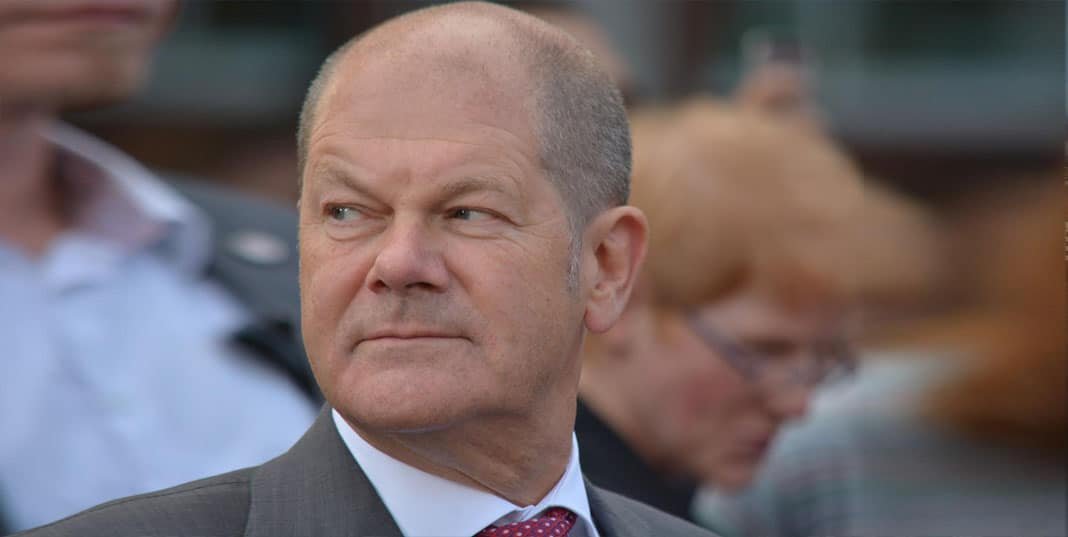
- On August 16, 2022, Chancellor Olaf Scholz met Swedish Prime Minister Magdalena Andersson in Stockholm.
- Andersson thanked Germany for its swift ratification of Sweden’s NATO membership application; Scholz called the applications of Sweden and Finland a “historic step.”
- The two discussed the consequences of Russia’s war of aggression against Ukraine, inflation and energy prices, and reducing dependence on fossil fuels.
- Afterward, they visited the truck maker Scania south of Stockholm.
Transcript
The following transcript was published by the German government.
Prime Minister Andersson: (in German) Good morning! Welcome to Stockholm! I would also like to thank you for Germany’s swift ratification of Sweden’s NATO application. We are meeting in Stockholm at a time that is still terrible for Ukraine. But it is also a great challenge for Europe. Nevertheless, I hope that Sweden, Germany and other European democracies can build an ever deeper community in these times.
(in English) It is always a great pleasure to meet you, Olaf. The war in Ukraine has now been going on for almost six months. Ukrainians have shown that they are able to defend their country. But Putin gives us no reason to doubt his ambitions. These are dark times for Ukraine, and they are dark times for Europe.
In times like these, European cooperation and unity are our greatest asset. In our work at the European level, our excellent relations are of great value. I know that you and I, Olaf, work well together. But I must also say that the unity European countries have shown in response to this war has been important and also impressive. We took decisions on sanctions against Russia very quickly, unprecedented in scope and scale. Both our countries and other European states have taken historic decisions to send military support to Ukraine and to strengthen our own defense.
Russia cannot win this war. That is important for Ukraine, and it is important for Europe. As long as the war continues, we must remain steadfast and united in our support for Ukraine.
It is very clear that we are in a new and uncertain geopolitical reality. We will not return to where we were before the war. In this context, Sweden and Finland decided to apply for NATO membership. Germany stood by our side throughout this process and gave security assurances. It was one of the first countries to ratify our application and Finland’s application. On behalf of my government and the Swedish people, I would like to express my heartfelt thanks for the strong support we have received from our German friends in this process.
Today the chancellor and I also discussed the impact of the war on our economies. Looking at current developments, I must say it is not a bad thing that we now have two former finance ministers in government. Energy supplies and uncertainty have led to rising prices. We have not experienced this in recent decades. It is affecting the economy in Europe, but also the global economy. In Sweden, we are preparing for difficult times.
At the same time, households and businesses are feeling the effects of inflation and uncertainty. Economic policy must address this and look at how households and businesses are affected. At the same time, we must act cautiously and responsibly when it comes to long-term fiscal policy.
Last but not least, we talked about security policy and about how important it is to reduce our dependence on fossil fuels. That is the only way forward for our climate, but also for our security. That is why we will also travel south of Stockholm to visit and tour a world-leading vehicle manufacturer, Scania. We will see green trucks and green batteries there. That is just one example of how this green transition is happening here and now, but also of how it creates jobs and hope for people here in Sweden.
Chancellor Scholz: Dear Magdalena, after you have visited me in Berlin several times, and since we have known each other for a very long time from working together as finance ministers and far beyond, I am delighted to be here in Stockholm as chancellor. I must admit that I am impressed by your German every time. My Swedish comes nowhere near it. In any case, I am very grateful for the good cooperation and friendship we both have personally, but of course also for the very good relations between our countries.
Germany and Sweden are very, very close partners, bilaterally, in the European Union and internationally. Our conversation today showed me once again how close and trusting these relations are. They will become even closer once Sweden has joined NATO. I am firmly convinced of that.
I hardly need to emphasize it, but I want to say it anyway: Sweden and Finland’s application for NATO membership is a historic step. The signing of the accession protocols by all 30 allies at the NATO summit in Madrid was no less historic, for the alliance and for Europe.
The German government welcomes Sweden’s sovereign decision to join NATO. With Finland and Sweden, we are gaining two valued allies who will strengthen NATO’s ability to defend itself and thus the security of us all.
That is important. Russia’s attack on Ukraine and its consequences show us that. I have spoken of a Zeitenwende, a historic turning point. We can no longer be sure that what has applied for the past decades still applies: that borders must not be moved by force and that no one tries to attack their neighbor and conquer part of its territory. We will only be able to prevent that by joining forces and being strong together. We are doing that in the European Union and in NATO.
But it also shows us how important it is to reduce our dependence on fossil energy imports. We need not only alternative suppliers of energy and raw materials but also an ambitious national and European energy and climate policy. The goal must be to massively accelerate the expansion of renewable energy. Phasing out fossil fuels is not only a necessity for the climate but, as we now understand, also a security imperative. The current situation makes the transformation of industry toward climate neutrality, which we have both set ourselves as individuals and as countries, even more urgent, so that we can secure our supplies and keep prices stable.
The prime minister and I are aware of how important it is that our countries stand together. That is why Sweden and Germany also cooperate closely in battery cell research, for example, which is a very, very important field. When we visit Scania now, we will learn something about that too, because it is part of the transformation we need in mobility.
We also work closely together in the European Union. I am pleased that Sweden will take over the EU presidency at the beginning of next year. I can assure you that we will provide all the support that is possible and necessary. We will also continue to advance ambitious EU climate and biodiversity goals under the European Green Deal and the Fit for 55 package.
Thank you once again for the invitation. I look forward to our good cooperation and, I must honestly say, also to getting to drive trucks now.
Question: I have a question about Sweden and Finland’s NATO accession process. Last week there was a first extradition to Turkey. Do you think this step will speed up the ratification process in Turkey?
What further steps are you planning to convince Turkey to ratify the membership, and to do so soon?
Chancellor, a question for you on NATO too: Germany ratified Finland and Sweden’s accession very quickly. But seven countries are still missing. When do you think this process can be completed? Do you expect there could still be problems with Turkey that delay this process?
Prime Minister Andersson: In Madrid we agreed on a memorandum of understanding between Sweden, Finland and Turkey. From our perspective, we will stick to what we agreed.
As for extraditions, they are being carried out in Sweden in accordance with Swedish and international law. We agreed on that too. The case last year was in accordance with Swedish and international law. We will continue to handle things that way.
Chancellor Scholz: I am very confident that the countries that have not yet ratified will do so soon, including Turkey. I think the agreements that Sweden and Finland have reached with Turkey show that a good path has been laid out. These agreements are also not that unusual. They are not far from the practice that our country, for example, has followed for a long time. In that sense, they fit in with the joint activities we have. So I am very confident that things will now move very quickly. I don’t want to commit to a date, but I think we can see that everyone is very keen to bring the matter to a swift conclusion.
We look forward to having Finland and Sweden in NATO, and we need them as partners.
Question: A question in English for both of you: Chancellor, many countries in the EU are saving gas and energy, also in solidarity with Germany. Do you think Sweden should also restrict its energy use in solidarity with Germany in order to be able to help you with your supply shortages?
The same question to you, Prime Minister: do you think Sweden should also restrict its energy use and save energy to show solidarity with the continent?
Chancellor Scholz: (in English) I think we should save energy and gas. We should all do that together. We are doing it. It is absolutely necessary to have a safe winter. Our economies are closely interconnected. We work closely together, and we grow together. So it is absolutely necessary that we cooperate. As you know, we are doing that for many other countries too, even though we are restricting our use of gas and preparing for the winter. We are filling our gas storage facilities. We are also using gas to generate electricity that is urgently needed in our neighboring countries to the south. That shows that we all work together and can rely on each other.
That will also be the case with gas use if there are supply shortages in other countries. I think we are all looking at our capacities. Germany will do so too, even though we have certain needs. But you can be sure that we started preparing for this situation early. When I became chancellor, I tried to understand what would happen if less gas were delivered to us. So we decided very quickly to build new pipelines and terminals in northern Germany very quickly, in Brunsbüttel, Lubmin, Wilhelmshaven and Stade. That gives us the opportunity to buy and import LNG, not only through the facilities we already have in ports in Belgium, the Netherlands and France but also through our own ports.
That will also be useful for many of our neighbors, for example the Czech Republic and Slovakia, because they have no coastline and of course also want to become independent of gas supplies from Russia. So that must be important and must necessarily also take a route through Germany, so that they can use the coastline we have. That is the right way to resolve this situation. I understand that it will be a very difficult time, but people must also understand that we will manage and handle it well.
Prime Minister Andersson: As Olaf has already said, these are difficult times. Electricity bills are a heavy burden, not only for Swedish households but also for European households. People are worried about this here and now, but also with a view to the fall and winter, and for good reason. We should save energy, but of course that is also in our own interest. It is a way to reduce electricity bills, but also a way to lower electricity prices. So we have to save energy. That is in our interest, but also in the interest of electricity prices.
The connection we have with Germany is this: the cable is already full. So if we saved energy, it would not help the Germans.
Question: I have a question for both of you. In Sweden and in Germany there is a debate about continuing to use nuclear power. What is your position? How important is nuclear power, above all for energy security across Europe?
Allow me one more question about Ukraine, since you mentioned Ukraine. Mr. Zelensky has repeatedly stressed that he wants to retake Crimea. Would such a step be covered by the right to self-defense, and could the Ukrainian army use the weapons that Germany and Sweden have supplied to Ukraine for that purpose?
Chancellor Scholz: As far as the use of nuclear energy is concerned, different paths are being taken in Europe, and that is what we agreed with each other. Each country must make its own decisions about how it will achieve a CO2-neutral economy around the middle of this century. This is a major industrial modernization project, which means that we will have to massively expand our generating capacity.
Germany will take the path of massively expanding renewable energy. To this end, we have introduced all the necessary legislation and also increased the pace, so that we achieve higher expansion targets, and at a faster rate than has been the case so far. We will now stick to this with all our strength. I am sure that we will also succeed in producing 800 terawatt hours of electricity in 2030 instead of 600, 80 percent of it from renewable energy, and that in the following decade we will then succeed in generating twice as much electricity again and in producing and importing hydrogen to build the economy of the future.
In other countries, nuclear power plays a role. Those are national decisions that it is not for us to comment on or judge.
As for Ukraine, we support it with the weapons we supply. They serve to enable it to defend the integrity and sovereignty of its own national territory.
Prime Minister Andersson: As Olaf said, different European countries have chosen different paths on nuclear power. We respect that this is a domestic, national decision.
In Sweden we use nuclear power. It will be part of our energy mix, and for a long time. It is also still permitted to build new nuclear power plants. But we have no plans to build new nuclear power plants in Sweden. The government has also invited the opposition to hold new talks on the future of energy supply, energy production and the energy mix in Sweden. We will see whether that happens after the elections.
On Ukraine: it is a historic decision that Germany and Sweden have taken to supply weapons to Ukraine. As Olaf also said, the point is that Ukraine can protect and defend its territorial integrity and use the weapons for that purpose.
Question: I have two questions, and I would like to address my first question to the chancellor. Is your visit connected with your colleague’s election campaign?
To the prime minister, and perhaps you can also answer in Swedish: how do you respond to the Center Party, which wants to be part of a government?
Chancellor Scholz: (in English) This visit reflects the deep friendship between the two of us and our two countries. Immediately after taking office, I decided that I wanted to travel to Sweden for an inaugural visit. Magdalena has already visited me in Berlin since I became chancellor, and we also met very often when we were both finance ministers. So we have a good relationship, personally but also between our countries.