
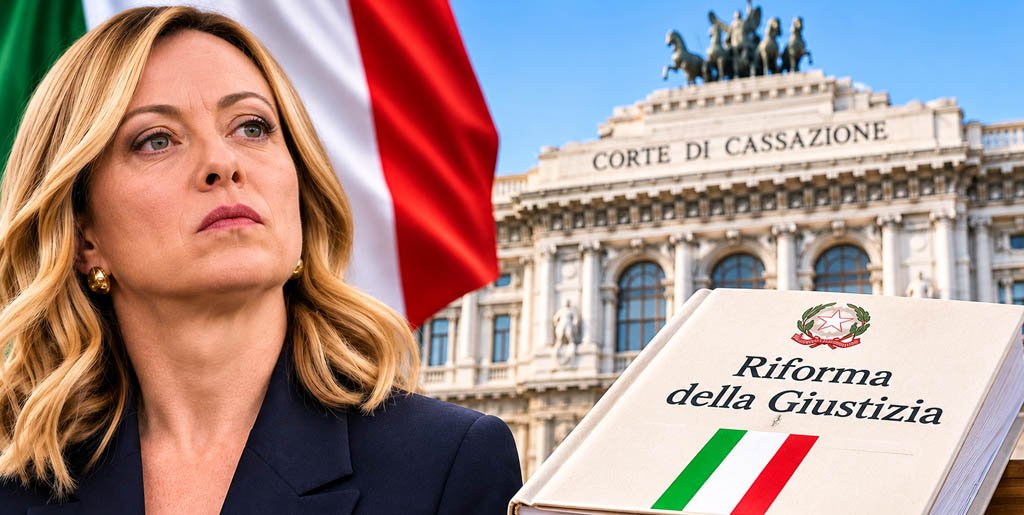

With 53.7% of the vote, Italians have rejected the constitutional reform that would have separated the careers of judges and prosecutors. Turnout was unexpectedly high. What the result means for the government and for the separation of powers.
The result. In the constitutional referendum on March 22 and 23, about 14.5 million voters voted no and just over 12.5 million voted yes: 53.7% to 46.3%. Turnout was just under 59%, far above the roughly 30% in the 2025 referendums. There was no quorum requirement, so the result is binding.
What the reform sought to do. The law, passed by parliament on October 30, 2025, without a two-thirds majority, amended seven articles of the constitution. Judges and prosecutors were to have separate careers, with no possibility of switching. The Superior Council of the Magistracy (CSM) was to be split into two bodies whose judicial members would be chosen by lot. A new High Disciplinary Court was to rule on misconduct by judges and prosecutors.
The arguments. The government saw the reform as making judges more independent of the prosecution and ending the influence of factions within the judiciary. Opponents, including large parts of the judiciary and the opposition, warned that separated and weakened prosecutors could in the long run move closer to the executive. The governing parties stressed that the vote was not about the government; but Prime Minister Giorgia Meloni herself campaigned for a yes vote in the final weeks, and many observers saw it as a vote on her government.
What the result means
For the government, it is a heavy defeat on a project it had itself declared one of its most important. The high turnout and the clear lead of the no vote in the big cities, in the south (over 65% in Campania) and among voters under 35 show a mobilization the coalition had not expected. Meloni spoke of a “missed opportunity to modernize Italy” and said the government would carry on.
For the separation of powers, the existing system remains in place: a single judiciary with a joint self-governing body. The problems of Italy’s justice system, such as long proceedings, factional fights and staff shortages, are not solved by this. But the majority did not want them solved this way.
For press freedom, a closer look is worthwhile. In Italy, independent prosecutors and a free press have for decades been two sides of the same coin. Many major corruption cases came to light because investigators investigated and journalists reported. Where investigators come under political pressure, the number of cases journalists can report on falls. And where journalists may no longer quote from case files, as since the ban on publishing arrest warrants, public scrutiny declines.
The March vote is therefore also a signal that many citizens do not want to weaken the checks within their state. A democracy depends on branches of power that limit each other, and on a press that can report on them. For the individual, that is the guarantee that the powerful must answer to independent institutions.
Sources
- Il Post: Il No ha vinto al referendum costituzionale sulla giustizia (March 23, 2026)
- Il Resto del Carlino: Risultati, bocciata la riforma Nordio
- Il Resto del Carlino: Risultati definitivi, Campania 65.22%, Meloni: “occasione persa” (March 23, 2026)
- Avvenire: Il Senato approva la separazione delle carriere (October 30, 2025)
- L’Espresso: Il referendum diventa un giudizio sul governo (March 15, 2026)
- Avvenire: Affluenza boom, record al Nord (March 23, 2026)
- La Sicilia: La mappa del voto (March 23, 2026)
- PMI: Il No trionfa, cosa succede ora (March 24, 2026)
- Quotidiano.net: Quando si vota, cosa prevede la riforma (March 13, 2026)